





Pure sine vs modified: which 12V inverter for car should you buy?
When selecting a 12V car inverter, it's crucial to understand various factors to ensure compatibility and safety for your devices. Below are six specific questions frequently asked by beginners, along with in-depth answers to guide your decision-making process.
1. What is the difference between pure sine wave and modified sine wave inverters, and which one is suitable for my car?
Pure sine wave inverters produce a smooth, consistent waveform identical to the power supplied by utility companies, making them ideal for sensitive electronics like laptops, medical equipment, and audio devices. Modified sine wave inverters generate a stepped approximation of a sine wave, which is sufficient for simple devices such as phone chargers and small appliances but may cause issues with sensitive electronics due to harmonic distortions. For optimal performance and device safety, especially when powering sensitive equipment, a pure sine wave inverter is recommended.
2. How do I determine the appropriate wattage for a 12V car inverter to power my devices?
To select the right inverter wattage, sum the continuous wattage requirements of all devices you intend to power simultaneously. For instance, if you plan to run a laptop (50W), a phone charger (10W), and a small fan (30W), the total continuous wattage needed would be 90W. It's advisable to choose an inverter with a continuous wattage rating higher than your total to accommodate any surge power requirements when devices start up. In this example, a 150W inverter would be suitable.
3. Are there specific safety features I should look for in a 12V car inverter to protect my devices?
Yes, essential safety features to consider include:
Overload Protection: Prevents the inverter from operating beyond its capacity, avoiding potential damage.
Over-temperature Shutdown: Automatically turns off the inverter if it overheats, protecting both the inverter and connected devices.
Low and High Voltage Cutoff: Safeguards your vehicle's battery by shutting down the inverter if voltage levels are too low or high.
Short Circuit Protection: Detects and responds to short circuits, preventing damage to the inverter and connected devices.
These features enhance the safety and longevity of your devices and the inverter itself.
4. Can I use a 12V car inverter to power high-wattage appliances like refrigerators or power tools?
While it's possible to power high-wattage appliances with a 12V car inverter, it's essential to ensure that the inverter's continuous and surge wattage ratings meet or exceed the requirements of the appliance. For example, a 1000W inverter would be necessary to run a refrigerator that requires 800W continuously and has a 1600W surge at startup. Additionally, consider the capacity of your vehicle's battery and alternator, as running high-wattage appliances can drain the battery quickly and may require the engine to be running to prevent depletion.
5. How do I install a 12V car inverter, and are there any specific installation considerations?
Installation methods vary based on the inverter's design and intended use:
Cigarette Lighter Plug-In: Suitable for inverters up to 150W, these plug directly into the vehicle's 12V outlet. Ensure the inverter's wattage does not exceed the outlet's maximum rating.
Direct Battery Connection: For inverters exceeding 150W, a direct connection to the vehicle's battery is recommended. This method provides a stable power supply and reduces the risk of overloading the 12V outlet.
When connecting directly to the battery, use appropriate gauge wires and fuses to prevent electrical hazards. Ensure the inverter is installed in a well-ventilated area to prevent overheating. Always follow the manufacturer's installation guidelines for safety.
6. What are the potential risks of using a modified sine wave inverter with sensitive electronic devices?
Using a modified sine wave inverter with sensitive electronics can lead to several issues:
Reduced Efficiency: Devices may operate less efficiently, leading to increased energy consumption.
Potential Damage: Harmonic distortions can cause overheating or malfunction in sensitive components.
Shortened Lifespan: Continuous exposure to a non-sinusoidal waveform can degrade the device's internal components over time.
To ensure optimal performance and longevity of your sensitive electronics, it's advisable to use a pure sine wave inverter.
Conclusion
Selecting the appropriate 12V car inverter involves understanding your power needs, the types of devices you intend to use, and the safety features required to protect your equipment. By considering these factors, you can make an informed decision that ensures reliable and safe power conversion for your devices.
For personalized recommendations and a quote tailored to your specific requirements, please contact us at info@csinverter.com or visit our website at www.csinverter.com.


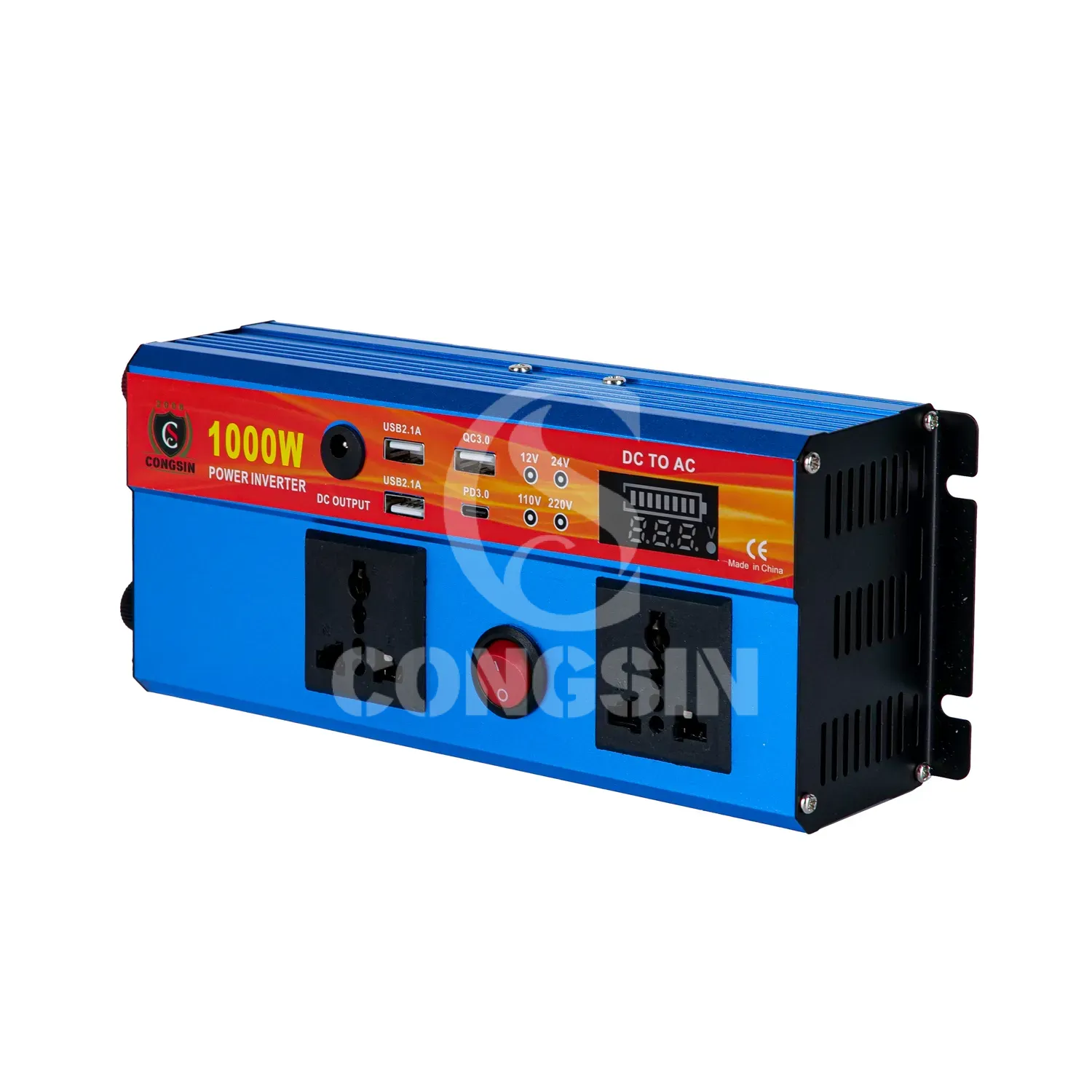
Pure Sine Wave Inverters
Can it run inductive loads like fridges or tools?
Yes, pure sine wave output supports all load types.
What capacity battery is needed to drive a 1000W electric kettle?
It is recommended to match with a 12V 100Ah or larger capacity battery. When a 1000W electric kettle is working, the power consumption per hour is about 83Ah (1000W÷12V≈83A), and a 100Ah battery can support continuous work for about 1 hour (actual battery life is affected by battery aging).
Products
Can I customize the logo?
Yes, OEM/ODM service is available.
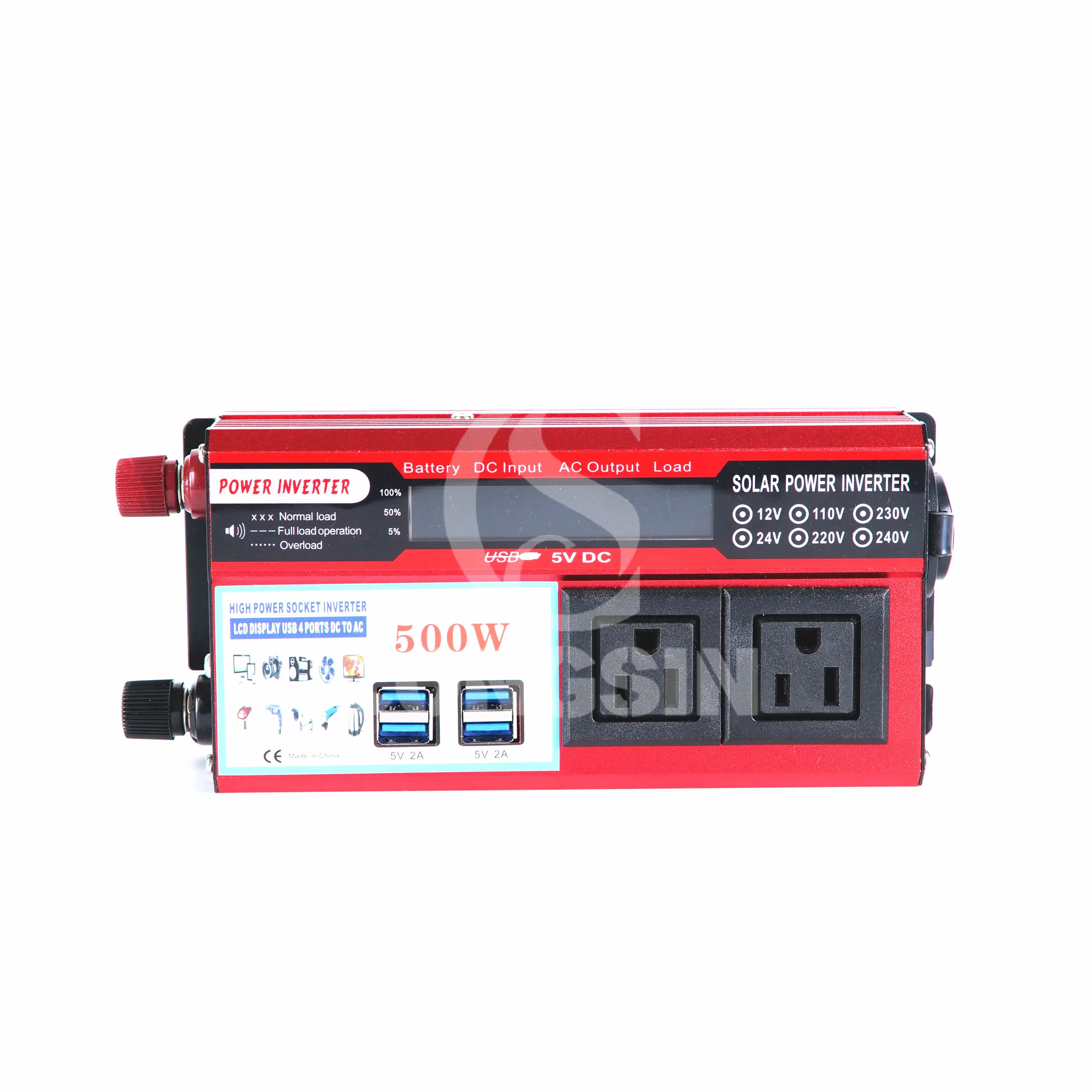
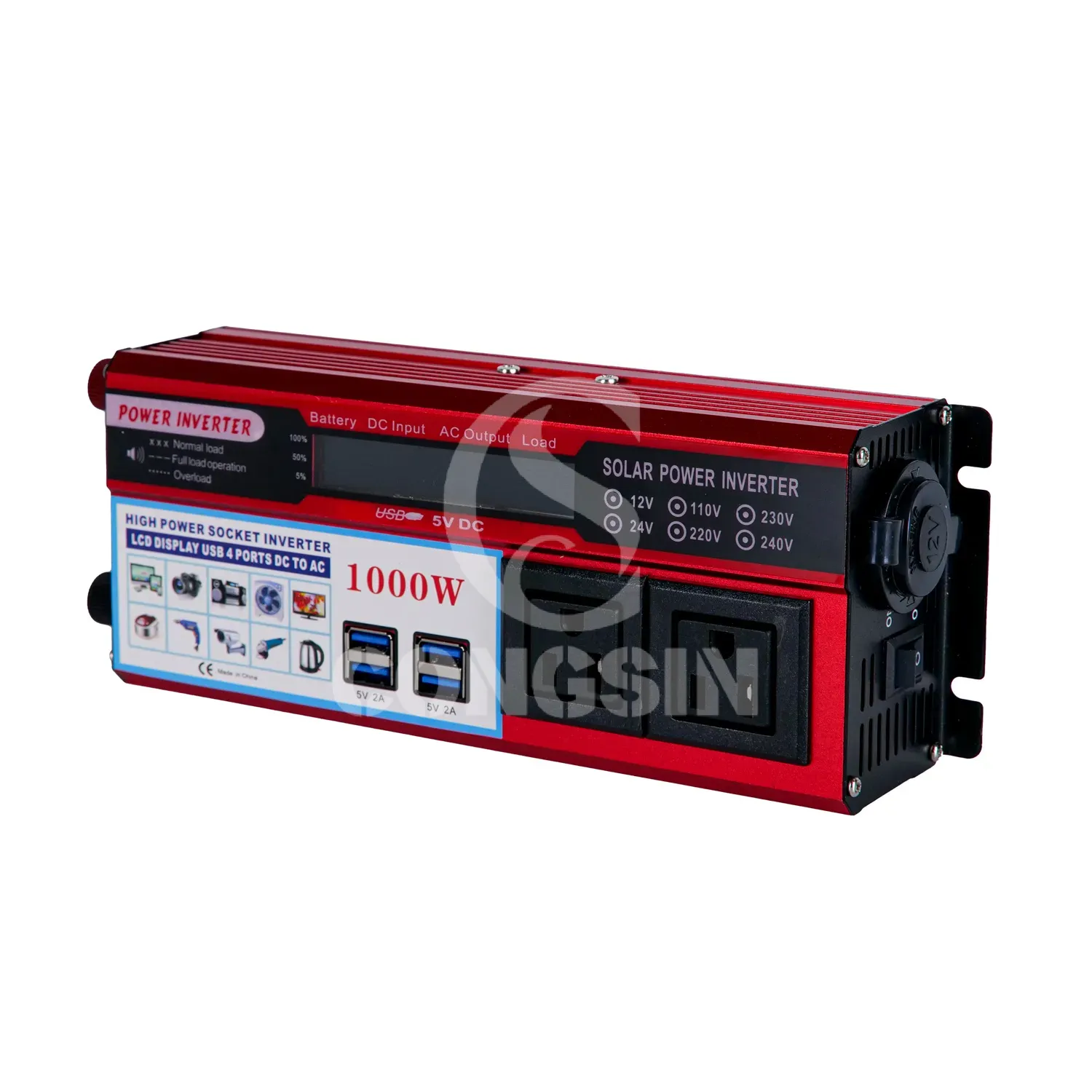
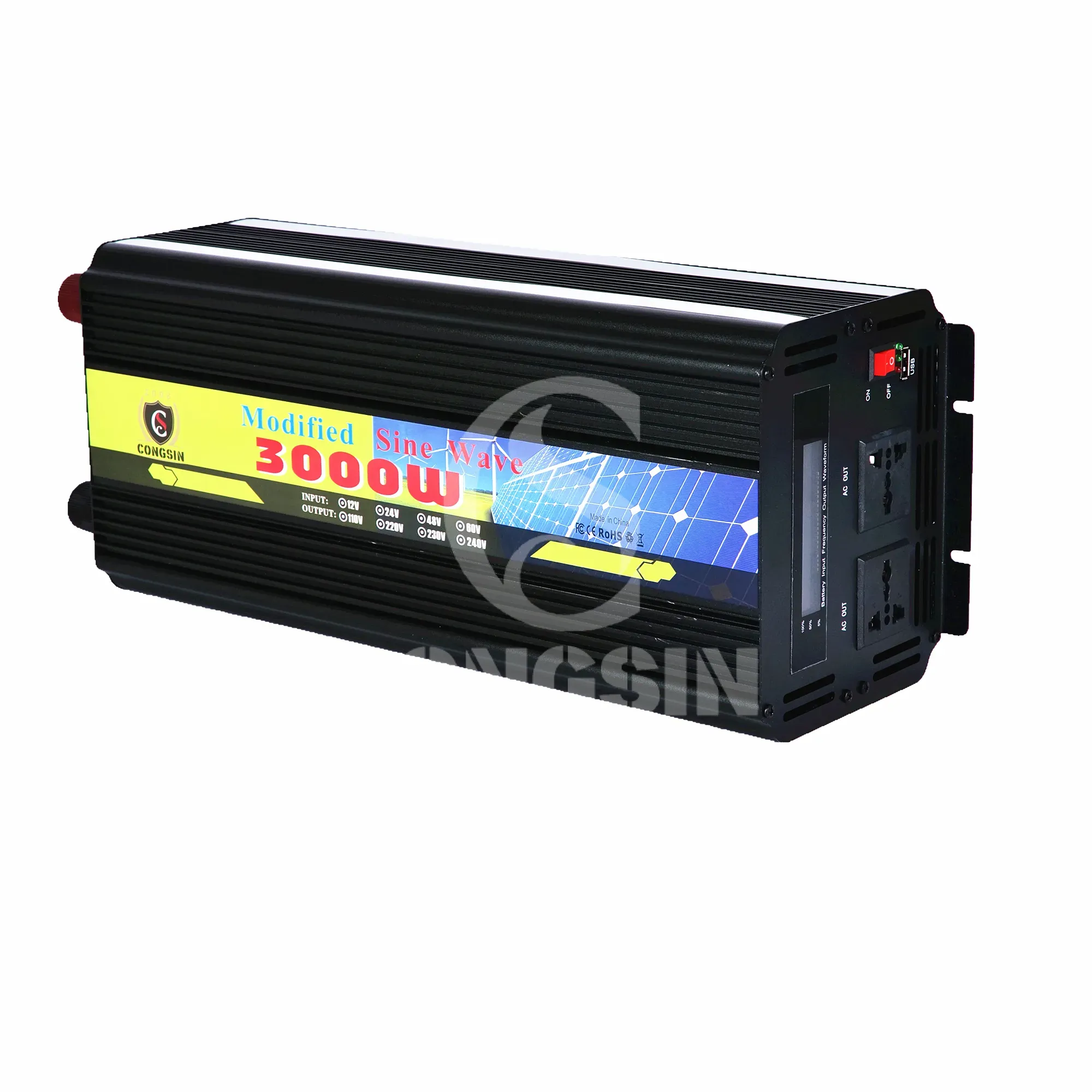
Modified Sine Wave Inverters
Can other input voltages be customized?
Yes, the regular is DC12V, and DC24V, etc. can be customized. Please consult customer service for details.
Can this inverter power a laptop?
If the laptop power is within 150W and the input is AC220V, it can supply power normally.
Get in Touch with Our Team
You can also communicate with us directly through our online contact form. Please fill in the following information, and our team will contact you as soon as possible after receiving your message.

CONGSIN is a trusted OEM factory for power inverters, solar charge controllers, and DC converters. Reliable solutions for global B2B buyers.
 High Quality
 7/24 Service
 Guaranteed Warranty
© 2025 Congsin. All Rights Reserved.